
Northern Europe spends the winter at 4 °C under cloud. The Costa del Sol spends it at 18–22 °C in the middle of the day, with the mountains visible from the beach and the restaurants half empty. This is the region's best-kept open secret, and the reason a large number of Britons, Irish, Swedes, Norwegians and Finns come here between November and March rather than in August.
It is not, however, summer. This is what winter here is genuinely like, from people who work outdoors in it.
Winter here, honestly
- Daytime: typically 17–20 °C on the coast, often more in February and March. Nights 8–12 °C.
- Rain: this is the rainy season, but it comes in bursts — a few wet days, then a week of blue sky.
- Sea: around 15–16 °C. Swimmable for the determined, not for the sensible.
- Prices: hotels and car hire drop substantially. Flights too, outside Christmas.
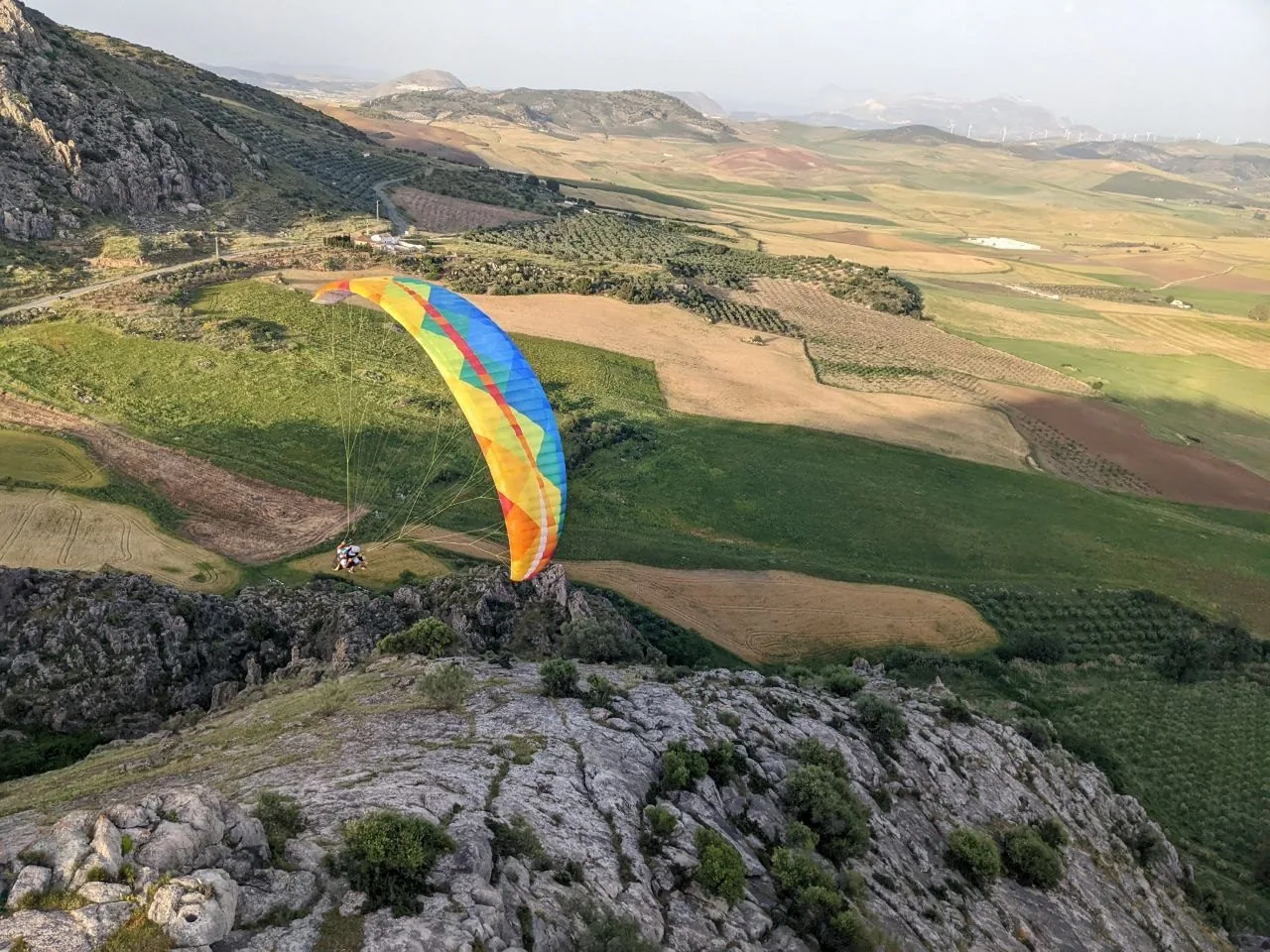
- Flying: yes. Winter is one of our better seasons — clear, stable air and enormous visibility.
Why winter works here and doesn't elsewhere
The Costa del Sol has the Sierra de Mijas, the Sierra de las Nieves and the Serranía de Ronda stacked up behind it, blocking the cold air that comes off the meseta. The sea to the south is still relatively warm in December. The combination gives a strip of coast that stays mild when Madrid, three hours north, is near freezing.
The practical effect: you can eat outside at lunchtime in January. You'll want a jacket by 6pm.
What's open, what isn't
✅ Open and often better
- Golf — this is high season, not low.
- Ronda, the white villages, Caminito del Rey.
- Málaga's museums and old town.
- Hiking — the only sane time of year for it.
- Our flights: paragliding, paramotor and balloon.
- Restaurants in the towns where people actually live.
⚠️ Closed or reduced
- Some beach chiringuitos, especially Nov–Feb.
- Water parks and a few coastal attractions.
- Boat trips and watersports — reduced schedules.
- Parts of Torremolinos and Benalmádena go quiet.
- Some hotels close for refurbishment in November.
Golf: the real winter industry
The Costa del Sol has around 70 courses, and its peak golf seasons are September to November and February to May — precisely when the rest of Europe can't play. Green fees drop noticeably in December and January, courses are quieter, and the weather is usually better for walking 18 holes than it is in July.
Which creates a very specific problem we hear about constantly: one half of a couple plays, and the other half has a free morning in a resort that's half asleep. If that's you, we wrote a whole guide to it.
Flying in winter — the bit that surprises people
Visitors assume flying is a summer activity. In Andalucía it isn't, and there are three reasons why winter is often better:
- The air is cleaner. Summer haze over the coast can cut visibility badly. On a clear winter day you can see the Sierra Nevada's snow to the east and the Rif mountains of Morocco to the south.
- Calmer conditions. Summer thermals build hard by mid-morning, which is exciting but bumpy. Winter air is more stable — a smoother ride for a first flight.
- You can fly at a civilised hour. In August we go early to beat the heat. In January, midday is the best slot.
It is colder up there — expect roughly 5–6 °C less than on the ground, plus wind chill. We provide the flight equipment; you bring closed sports shoes, warm layers, and a hat and gloves in midwinter. Most people are surprised by how comfortable it is once they're flying.
The honest caveat: winter is also our most weather-dependent season. Atlantic fronts come through and when one does, nobody flies. We confirm your slot 24–48 hours ahead and reschedule at no cost if the forecast is wrong. If you're here for a week, that's rarely a problem. If you're here for two days, book early in your stay so there's room to move.
Fly on a clear winter day
Tandem paragliding from €100 and paramotor over Ronda from €100 — all winter. €20 deposit, free rescheduling if the weather turns.
Book my flight →Licensed pilots · Registered adventure tourism company AT/MA/00330 · Insurance included · Free rescheduling if the weather is not rightWhat to do, month by month
| Month | What it's like | Do this |
|---|---|---|
| November | Mild, some rain, very quiet. 19–21 °C. | Golf, white villages, hiking in Grazalema before the cold. |
| December | Málaga's Christmas lights are a genuine event. Cool evenings. | Málaga old town, Christmas markets, flying on clear days. |
| January | Coldest month, still 17–18 °C at midday. Cheapest. | Museums, hammam, long lunches, Ronda without crowds. |
| February | Almond blossom inland. Carnival in Málaga and Cádiz. | The Cádiz carnival is one of Spain's best. Book ahead. |
| March | Everything wakes up. 20–22 °C, long days. | Everything. March is arguably the best month of the year here. |
Practical notes for a winter stay
- Heating. Spanish holiday apartments are built to stay cool, not warm. Check the listing has heating — in January you'll want it.
- Pack layers, not woollens. You'll be in a t-shirt at 2pm and a jacket at 7pm, every day.
- Rent a car. It's cheap in winter and the coast is quiet — the inland trips are what make an off-season stay worthwhile.
- The mountains are properly cold. Ronda sits at 750 m and Grazalema higher; it snows there most winters.
- Semana Santa moves. Easter week transforms Andalucía and fills every hotel. Check the dates before you book anything in March or April.
Is it worth coming in winter?
If you want a beach holiday, no. If you want mild sunshine, an empty Ronda, mountain walks without heatstroke, restaurants with locals in them and prices that are 30–40% lower, then it is the best time of year to be here. The people who come every winter for three months at a time have worked this out already.